
Should you cycle in the rain?
Plan a bike ride around rain: compare forecast windows, check visibility and practical gear, and understand what weather data cannot tell you.
Compare two rain windows
Your inputs. Clear limits. A better riding plan.
Your next great ride starts with the right forecast.
Enter values from the point forecast; this manual comparison assesses rain alone. Gear never improves a weather score.
Open the live bicycle forecastPlan your ride
Set your route and times to get a tailored weather forecast.
Your next great ride starts with the right forecast.
Insufficient data — choose a location to load a forecast.
Weather guidance, not a guarantee of safe riding. Check official warnings, road conditions and the full outward and return journey.
A GO cannot assess your bike, equipment, ability or every hazard.
Your whole ride, not one good hour
Best windows in green, rough periods in red
Example Illustrative hours, not weather data. Choose a place and check the forecast.
Today
Sat 10 Oct
Tomorrow
Sun 11 Oct
- GO
- Caution (MAYBE)
- Marginal (MAYBE)
- NO-GO
- Insufficient data
Better weather
Better rides
Compare the return, not just departure
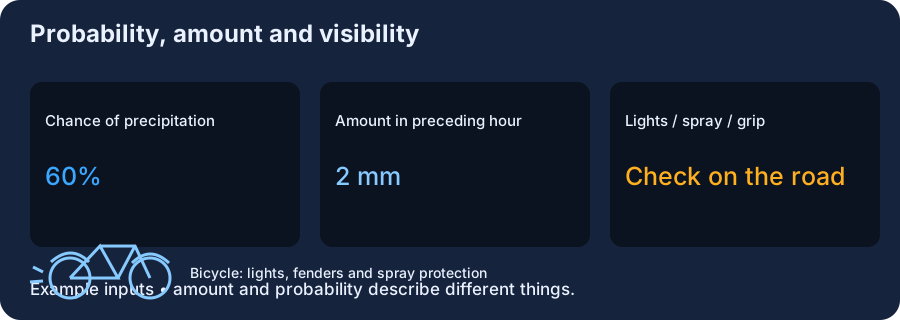
Rain probability and amount answer different questions. A 60% probability is not 60% of the hour covered in rain; 2 mm is an amount over the provider’s preceding hourly interval. Enter both outward and return values in the comparison, or use the live forecast below. The manual result describes rain preferences alone and cannot be a whole-ride GO.
The default bicycle rain settings use 35% and 60% probability and 0.3 and 2 mm hourly precipitation as planning thresholds. They are adjustable product choices, not measurements of tyre grip. Water, oil, metal covers, fallen leaves and painted surfaces need an on-road judgement.
Visibility and practical equipment
Check lights and reflectors, allow for spray, and consider fenders and a suitable waterproof layer. NHTSA recommends being visible and predictable and checking equipment before riding. Ticking a gear box creates a reminder only: it never improves the verdict. Persistent rain may make a long return very different from a short shower at the start.
Check rain amount and probability separately
The live result combines rain, wind, temperature and visibility for the selected point. Rain probability describes the forecast chance, while precipitation amount describes the modelled intensity. A single percentage does not tell you what the road will feel like. Inspect the hourly columns for the whole ride and your expected return rather than relying on the daily icon.
In the cycling scorer, a rain probability of 35% subtracts 15 points. A probability of 60%, or precipitation of at least 0.3 mm/h, subtracts 35. Heavy rain of at least 2 mm/h subtracts 60. Specified weather codes also trigger branches. These rain branches are alternatives, not penalties added together; wind and temperature penalties can still combine with them.
How rain changes the decision
The tool does not measure grip, puddle depth, drainage or visibility through traffic spray. Wet metal, painted markings and accumulated surface debris deserve attention regardless of the score. A point forecast cannot inspect a flooded crossing. Follow local closures and warnings and assess the surface where you actually intend to ride.
On an out-and-back route, the return can have different rain or wind even if it uses the same roads. Use the route planner with a realistic average speed and compare the destination near arrival. If you choose an alternative path, check its actual surface and restrictions; neither a city forecast nor a different line on a map establishes that it is usable.
Examples explain the model, not the road
In the dry reference hour, changing precipitation to 0.3 mm/h gives 65/100, MAYBE. Combine that rain with 45 km/h gusts and the score becomes 45/100, also MAYBE but near the lower boundary. Other penalties may move it into NO-GO. Two hours with the same verdict can therefore have substantially different inputs.
The examples start with air and feels-like temperature 18°C, steady wind and gusts 10 km/h, visibility 10 km, no precipitation and zero rain probability. They are worked software examples, not a current local forecast. Scores of 70–100 mean GO, 45–69 MAYBE and 0–44 NO-GO after critical caps have been applied.
Gear and a plan that addresses the reason
Consider suitable rain protection, visibility aids and carrying dry layers for the stop or return. Check lights, brakes and tyres according to their instructions. Equipment can help with comfort and visibility but cannot remove floodwater or make the surface predictable. Avoid interpreting a rain jacket as a way to change the weather score.
If rain is the main reason, compare later hours and the duration of the entire outing. If gusts or cold are also contributing, a gap in showers may not address the other conditions. Allow for delays and check the latest forecast before leaving. A shorter outing, a different departure time or postponement can be more useful than trying to chase the best daily colour.
Frequently asked questions
Does a 35% rain probability mean NO-GO for cycling?
Not by itself. The scorer subtracts 15 points at that probability, but combines it with the other inputs. At 60% probability or 0.3 mm/h it uses a larger rain penalty. Inspect amount, gusts, temperature and visibility for each hour. The percentage alone cannot determine grip or whether your route is usable.
Will waterproof clothing change the cycling verdict?
No. The score describes forecast inputs and does not know which clothing you wear. Rain protection may help comfort, but it cannot remove standing water, poor drainage or reduced surface grip. Check your equipment and actual route conditions separately, then compare the timing of the complete ride, including the return, before deciding.
Why is the daily summary GO when my commute is wet?
The daily summary averages the four best daytime hourly scores. It does not describe every hour, so a wet commute can fall outside that favourable period. Inspect your departure and return hours in the live view, check the rain amount and gusts, and use the route planner for locations along a longer ride.
Forecast source: Open-Meteo. See the full scoring methodology and send a correction.
More cycling weather
Sources and limits
Source review: 10 October 2026. Forecasts: Open-Meteo, CC BY 4.0. Planning thresholds are GoNoGo preferences.